


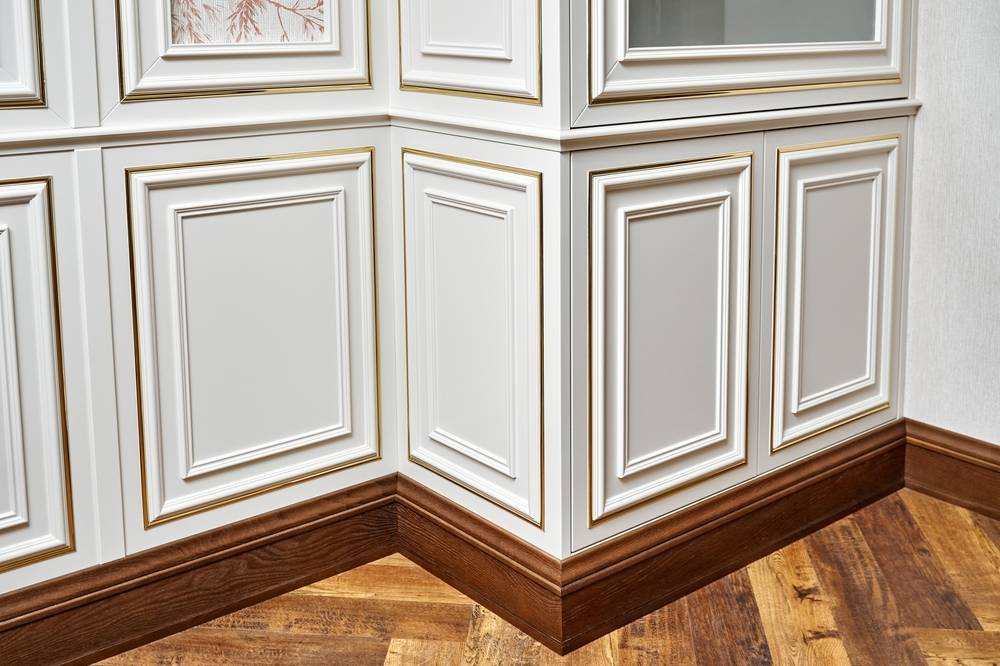
When a home feels polished, it’s usually not because of one big feature. It’s the small details working together. One of the most important details is the combination of baseboards and casing. These elements shape the edges of every room. They define the lines between floors, walls, doors, and windows.
If they are done right, your home looks clean and high-end. If they are done wrong, something always feels off.
The good news is this.
You don’t need complicated designs to get a high-end look. You just need the right combinations.
Why Do Baseboards and Casings Matter So Much?
Most people focus on furniture and paint.
But trim is what holds everything together.
Baseboards run along the floor. Casings frame doors and windows. Together, they create structure.
Without them, rooms feel unfinished.
With the right trim, rooms feel complete.
This is especially true in Ontario homes, where open layouts make trim more visible across multiple spaces.
What Makes a Baseboard Look Clean and High-End?
A high-end baseboard is not always large or detailed.
It is balanced.
It fits the size of the room. It matches the style of the home.
Here are the key traits of clean baseboards:
- Straight lines or simple profiles
- Consistent height across the home
- Smooth finish with no gaps
- Proper proportion to ceiling height
High-end design is about control. Not excess.
How Tall Should Baseboards Be?
Baseboard height changes everything.
If baseboards are too small, they disappear. If they are too large, they can feel heavy.
Here is a simple guide:
- 8 ft ceilings → 3.5″ to 5″ baseboards
- 9 ft ceilings → 5″ to 7″ baseboards
- 10 ft+ ceilings → 7″ to 10″+ baseboards
Many newer Ontario homes have 9 ft ceilings. That makes taller baseboards a strong choice.
They give the room more presence without feeling overwhelming.
What Is the Best Casing Style for a Modern Look?
Casing frames doors and windows.
It is one of the first things people see when they walk into a room.
For a clean and modern look, simple casing works best.
Popular options include:
- Flat stock casing
- Square edge trim
- Minimal profiles with sharp lines
These styles keep the focus on the overall space.
They also pair well with modern interior doors and open layouts.
Should Baseboards and Casings Match?
Yes.
They don’t need to be identical, but they should feel related.
A simple rule:
- If your baseboard is modern → your casing should also be modern
- If your baseboard has detail → your casing should match that level of detail
Mixing styles can make the space feel disconnected.
Consistency creates flow.
What Are the Best Baseboard and Casing Combinations?
Let’s look at combinations that consistently look high-end.
Clean Modern Combination
- Flat baseboards (5–7 inches)
- Square edge casing
- Minimal detail
- White or light neutral finish
This is one of the most popular choices in modern Ontario homes.
It works well with:
- Open-concept layouts
- Modern kitchens
- Simple interior panel doors
Transitional Combination
- Slightly detailed baseboards
- Soft-edged casing
- Medium height trim
This combination blends modern and traditional design.
It works well in homes that want a timeless look without being too formal.
Classic High-End Combination
- Taller baseboards (6–8 inches)
- Layered or stepped casing
- Subtle detail
This works well in older homes or homes with more traditional architecture.
When done right, it feels rich without being too heavy.
How Do Interior Doors Affect Trim Design?
Doors and trim must work together.
If your trim looks high-end but your doors look basic, the design feels uneven.
That is why many homeowners upgrade both at the same time.
Matching interior doors with the right trim creates a cohesive look.
For example:
- Shaker doors → simple casing + clean baseboards
- Raised panel doors → more detailed casing
- French doors → balanced trim that doesn’t overpower glass
When everything aligns, the space feels intentional.
What Role Does Colour Play in Trim Design?
Colour is just as important as shape.
The most common choice is white trim.
Why?
Because it works.
It creates contrast against walls. It stays timeless. It fits almost any design.
But other options can work too.
White trim with wood doors
This creates contrast and warmth.
Painted trim in soft tones
This can soften the space and feel more modern.
Stained wood trim
This works best in traditional or custom homes and pairs well with curated wood stain colours.
The key is consistency.
How Do You Make Trim Look Seamless?
Even the best trim can look bad if installed poorly.
To get a clean, high-end finish:
- Keep spacing consistent
- Align all trim heights
- Use proper joints and corners
- Avoid visible gaps
- Keep finishes smooth
These small details make a big difference.
What Mistakes Should You Avoid?
Here are the most common mistakes homeowners make:
- Mixing too many styles → Stick to one design direction
- Using different baseboard heights → This breaks visual flow
- Choosing trim that is too small → It can make the space feel unfinished
- Ignoring door and trim alignment → Doors and trim should feel like one system
- Rushing installation → Quality matters just as much as design
Can Trim Alone Make a Home Look High-End?
Yes.
Trim is one of the most cost-effective upgrades.
You don’t need to redo your kitchen or floors to improve your space.
Upgrading baseboards, casing, and custom millwork can:
- Improve visual structure
- Add depth to walls
- Create a finished look
- Increase perceived home value
This is why many homeowners start with trim before larger renovations.
Why Does Millwork Take It to the Next Level?
Trim is just the beginning.
Architectural millwork builds on it.
It adds detail in a controlled way.
Examples include:
- Wall paneling
- Wainscoting
- Built-in shelving
- Feature walls
When millwork matches your baseboards and casing, the entire home feels custom.
This is where homes move from standard to high-end.
How Do You Plan the Right Combination?
Start simple.
Walk through your home and look at your current trim.
Ask yourself:
- Does it match across rooms?
- Does it feel too small or outdated?
- Does it match your doors?
Then decide on a direction.
Modern, transitional, or classic.
Once that is clear, everything becomes easier.
Why Is This Important for Ontario Homes?
Ontario homes often have mixed styles.
New builds, renovations, and additions all come together.
Trim helps unify everything.
It creates a common language across the home.
It also handles seasonal changes well when built with quality materials.
This makes custom mouldings and millwork a smart long-term investment.
Final Thoughts: Simple Details, Strong Impact
You don’t need complex designs to create a high-end home.
You need consistency.
Baseboards and casing may seem small, but they shape every room.
When done right, they:
- Frame your space
- Guide the eye
- Create balance
- Make your home feel complete
And that is what high-end design really is.
Not more.
Just better.
Ready to Upgrade Your Trim and Millwork?
If your home feels unfinished, the solution may be simpler than you think.
Upgrading baseboards, casing, and millwork can transform your space without a full renovation.
Traditional Door Design and Millwork has been crafting custom doors, mouldings, and millwork in Ontario since 1989.